
CEREC

A man smiling at the camera, overlaid with text advertising dental services and a website link.

Experience the convenience and craftsmanship of CEREC restorations — same-day, tooth-colored solutions that restore function and appearance with modern digital dentistry.

Why same-day restorations change the patient experience

Many people expect dental restorations to require multiple visits, temporary crowns, and lengthy waits. With CEREC, that timeline is compressed: the design, fabrication, and placement happen in a single appointment. That streamlined process reduces uncertainty for patients and makes restorative care easier to fit into busy lives.

Beyond convenience, single-visit restorations reduce the number of times a tooth is exposed to temporary coverings or adjustments, which can lower the chance of complications between appointments. The result is a quicker route back to normal chewing, speaking, and smiling — all without sacrificing precision.

At the same time, CEREC helps minimize the common annoyances associated with traditional impressions and temporaries. For patients who prefer efficient, predictable care, this technology transforms a multi-step treatment into a single, comfortable visit that produces durable, natural-looking restorations.
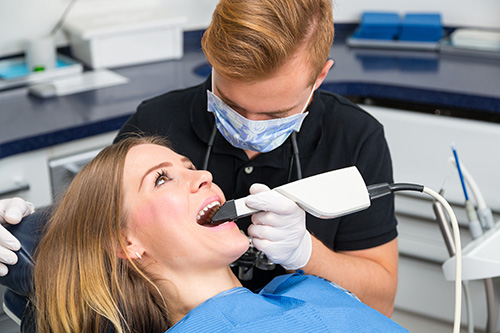
Woman receiving dental treatment with dental hygienist using an electric toothbrush.

What a typical CEREC appointment looks like

A CEREC visit begins with a focused evaluation of the tooth needing restoration. After any necessary preparation, your dentist captures a highly detailed digital scan of the prepared tooth and the surrounding dentition using an intraoral scanning wand. These three-dimensional images replace messy impression materials and provide a precise digital record.

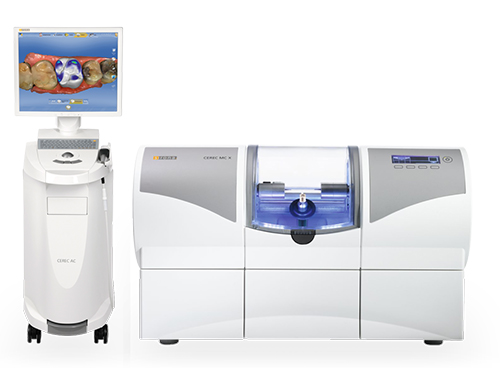
Once the scan is complete, the restoration is designed on-screen with specialized CAD software. The dentist can review shape, contacts, and shade to ensure the restoration integrates with your bite and adjacent teeth. When the design is approved, the file is sent to an on-site milling unit that fabricates a ceramic crown, inlay, or onlay while you wait.

After milling, the restoration is refined, polished, and tried in to confirm fit and aesthetics. Final adjustments are made chairside, then the restoration is bonded into place. Most patients leave the office with a fully finished, tooth-colored restoration and clear instructions for immediate care.

Display of advanced dental equipment including a 3D printer, digital imaging device, and a dental scanner.

How digital design improves fit and function

CEREC relies on computer-aided design and manufacturing (CAD/CAM) to achieve a level of accuracy that is difficult to match by hand. Digital scans capture microscopic detail, and the software helps the clinician plan occlusion, contact points, and contours with precision. That careful planning translates into restorations that feel natural and work reliably with your bite.

The controlled milling process produces restorations from high-quality ceramic blocks selected for strength and esthetics. Because the restoration is fabricated in a controlled environment, variations that sometimes occur with outsourced lab work are reduced. The result is a consistent, predictable outcome that prioritizes both function and smile harmony.

Clinically, precise margins and well-fitting restorations also support long-term tooth health. A well-seated restoration reduces the risk of leakage, recurrent decay, and undue stresses on the surrounding tooth structure, helping preserve natural tooth tissue over time.

A woman with curly hair stands confidently in an office setting, leaning on her hands with a smile, wearing a white shirt.

Materials and esthetics: blending durability with a natural look

CEREC restorations are milled from high-quality ceramic materials that mimic the optical properties of natural tooth enamel. These ceramics can be shaded and glazed to match surrounding teeth, producing a lifelike appearance that resists staining and maintains translucency over time. For many patients, the aesthetic outcome is indistinguishable from natural dentition.

Beyond appearance, modern dental ceramics offer robust mechanical properties appropriate for crowns, inlays, and onlays. When bonded properly, they provide excellent strength and longevity. Because the material is biocompatible, it’s well tolerated by surrounding tissues and does not contribute to allergic reactions associated with some metal restorations.

When considering restorative options, the combination of a tooth-colored material and a precise fit often makes CEREC an attractive choice for patients seeking restorations that are both durable and discreet.

Maintaining and protecting your CEREC restoration

Like any well-made dental restoration, a CEREC crown or onlay thrives with regular care. Daily brushing with a fluoride toothpaste, gentle flossing, and routine dental checkups form the foundation of long-term success. These habits help control plaque accumulation and detect early wear or concerns before they progress.

It’s also important to follow any specific guidance your dentist provides after placement, such as temporary dietary adjustments or bite checks. While ceramic materials are strong, habits such as chewing ice or using teeth as tools can stress restorations over time. Communicating changes in fit, comfort, or function helps your dental team address small issues quickly.

When cared for properly, CEREC restorations can provide many years of reliable service. Periodic professional evaluations let your dentist monitor the restoration’s integrity and the health of the supporting tooth, ensuring timely intervention if maintenance is needed.

At Draper Dental, we emphasize thoughtful planning and follow-up so that each restoration contributes to durable oral health and a confident smile.

In summary, CEREC brings digital precision, patient convenience, and natural-looking ceramic restorations together in a single appointment. If you’d like to learn more about how CEREC could fit into your treatment options, please contact us for more information.

Frequently Asked Questions

What are CEREC® same-day crowns?

+

Today, there's no need to merely imagine how nice it would be to have a dental crown fabricated in a single visit. With CEREC technology and advanced systems of care, multiple trips to the dentist are a thing of the past! Now, one appointment is all it takes for our skilled and experienced dentist to design, fabricate, and place a naturally beautiful and long-lasting same-day crown. And, best of all, unlike conventional methods of care, you won't have to endure messy dental impressions, wear a temporary crown, or wait weeks for your permanent restoration to come back from the laboratory.

How are CEREC® same-day crowns made?

+

Offering a level of precision and comfort that exceeds conventional methods of care, CEREC technology is nothing short of amazing! Advanced CAD/CAM technology, which stands for computer-aided design and computer-aided manufacturing, enables our dentist to translate images from an optically scan tooth into a 3D virtual model upon which a custom crown can be digitally designed. Once this step is done, the detailed specs are then wirelessly transmitted to a chairside 3D milling machine to fabricate your new ceramic crown while you wait!

What are the benefits of CEREC® same-day crowns?

+

With conventional methods of care, a dental crown can take two to three visits to fabricate and place. However, thanks to the benefits of CEREC technology, we can prepare a tooth, then design, fabricate, and place your new crown, all while you wait.

With CEREC same-day crowns, there's none of the mess of conventional dental impressions, wearing dental temporaries, or waiting for the final crown to come back from the lab. Once the prepared tooth is optically scanned and the restoration digitally designed, your new crown can be milled from the highest quality of dental ceramics that very same visit.

Will my CEREC® same-day crown look natural?

+

CEREC same-day crowns and restorations are fabricated from the highest quality of dental ceramics. Because dental porcelain reflects light in much the same way as dental enamel, your new crown will look flawless, completely natural, and blend seamlessly with your smile.

Do CEREC® same-day crowns last a long time?

+

A CEREC same-day crown offers much more than a convenient approach to getting a dental crown. It is also a high quality, naturally beautiful, extremely durable, and long-lasting dental restoration! The fact is, with proper oral hygiene and routine dental care your new crown will serve your smile well for many years to come.

What is CEREC and how does it work?

+

CEREC is a chairside CAD/CAM system that enables dentists to design, mill, and place ceramic restorations in a single appointment. The process begins with a detailed digital scan of the prepared tooth, which creates a three-dimensional model for design. Specialized software is then used to design the restoration and an on-site milling unit fabricates the final piece from a ceramic block.

The finished restoration is refined, polished, and bonded into place during the same visit, eliminating the need for temporary coverings and multiple appointments. This digital workflow enhances precision by using exact scans and controlled milling parameters. At Draper Dental, we use CEREC to streamline restorative visits while maintaining strict clinical standards for fit and function.

What types of restorations can be made with CEREC?

+

CEREC is commonly used to produce crowns, inlays, onlays, and some veneers, all crafted from high-quality ceramic blocks. These restorations are appropriate for repairing teeth with moderate decay, replacing failing restorations, and restoring structural integrity after endodontic treatment. Because the system works with a variety of ceramic materials, clinicians can choose options that balance strength and esthetics for each clinical situation.

Some complex cosmetic cases or situations requiring specialized laboratory techniques may still be better served by a dental laboratory, but many routine and advanced restorative needs can be met with CEREC. Your dentist will evaluate the tooth structure, occlusion, and aesthetic goals to determine whether a same-day restoration is the best choice. The clinician’s judgment ensures that each case receives an appropriate restorative pathway.

How long does a CEREC appointment typically take?

+

A typical CEREC appointment can range from about 60 to 120 minutes depending on the complexity of the case and any additional procedures that are required. Time is spent on tooth preparation, digital scanning, on-screen design, milling of the restoration, and final finishing and bonding. Because the fabrication occurs in the office, there is no waiting period for lab work or fitting temporaries between visits.

Cases that involve multiple teeth, extensive preparation, or required adjustments to occlusion may take longer and occasionally require follow-up for fine-tuning. Your dental team will provide an estimated appointment length based on the planned procedure and any concurrent treatments. Efficient scheduling and clear communication help make same-day restorative visits predictable for patients.

How does CEREC compare with traditional lab-made restorations?

+

CEREC restorations are designed and milled in-office, which shortens the treatment timeline and reduces the need for temporary restorations. Traditional lab-made restorations often involve multiple appointments, provisional coverage, and shipping to an external technician, where skilled ceramists can add detailed characterization. Both approaches can produce excellent results, but they differ in workflow, turnaround time, and where the fabrication occurs.

In many cases, the digital precision of CEREC yields well-fitting restorations that minimize adjustments at insertion, and the controlled milling environment reduces variability. For highly customized cosmetic layering or exceptionally complex occlusal situations, a dental laboratory may offer additional options that complement clinical goals. The dentist will weigh functional requirements and aesthetic priorities when recommending the optimal fabrication method.

Are CEREC restorations durable and reliable?

+

CEREC restorations are milled from strong, biocompatible ceramics that offer both good esthetics and mechanical performance when properly selected and bonded. The durability of a restoration depends on material choice, bonding technique, occlusal forces, and the overall condition of the supporting tooth. Careful design and precise margins achieved with digital scanning contribute to reduced microleakage and improved long-term outcomes.

Clinical success also relies on appropriate maintenance and patient habits, so regular dental checkups and good oral hygiene play an important role in longevity. In many cases, well-made ceramic restorations can provide many years of reliable service when these factors are addressed. The treating dentist will discuss material selection and maintenance strategies to support lasting performance.

Is the CEREC process comfortable for patients?

+

Many patients find the CEREC workflow more comfortable than traditional methods because it eliminates messy impression materials and reduces the number of appointments. Digital scans are minimally invasive and typically well tolerated, and most restorative procedures are performed under local anesthesia to ensure comfort during tooth preparation. The absence of an extended provisional phase also decreases the risk of sensitivity or irritation between visits.

Some patients may experience normal post-procedural sensitivity for a short time as the tooth adapts to the new restoration, and more extensive preparations can require additional care. The dental team will provide specific aftercare instructions and monitor healing at follow-up visits. If a patient has significant anxiety or sensitivity concerns, the practice can discuss comfort options and accommodations prior to treatment.

What materials are used for CEREC restorations and why are they chosen?

+

CEREC restorations are typically milled from advanced ceramic blocks such as lithium disilicate, feldspathic ceramic, or high-strength zirconia, each selected for its balance of strength and esthetics. These materials mimic the optical properties of natural enamel, resist staining, and are biocompatible with surrounding tissues. The choice of material depends on the restoration type, location in the mouth, and functional demands placed on the tooth.

Milling blocks come in a range of shades and translucencies so clinicians can match adjacent dentition and achieve a natural appearance. After milling, restorations are stained, glazed, or polished to fine-tune esthetic properties and surface texture. Proper material selection and finishing contribute to both the functional success and visual integration of the restoration.

Will a CEREC restoration match the color and shape of my natural teeth?

+

CEREC restorations can be closely matched to your natural teeth through careful shade selection and final characterization steps such as staining and glazing. Digital design tools allow the clinician to evaluate contours, contacts, and occlusal relationships on-screen before milling, which helps achieve a harmonious shape and proper function. The lab-like finishing performed chairside refines surface anatomy and color transitions to blend with adjacent teeth.

In cases with highly complex cosmetic needs or extreme shade variations, additional characterization techniques or laboratory collaboration may be recommended to achieve the desired result. Your dentist will discuss realistic expectations and the best approach to reach your aesthetic goals. Attention to detail during design and finishing is key to producing a restoration that looks natural and complements your smile.

How should I care for my CEREC restoration after placement?

+

Daily oral hygiene is essential for preserving any dental restoration, including CEREC crowns and onlays; brush twice daily with fluoride toothpaste and floss gently around the restoration. Avoid using teeth as tools and minimize habits like chewing ice or biting hard objects, which can place undue stress on ceramic restorations. If you have a history of grinding or clenching, discuss a protective nightguard with your dentist to protect both restorations and natural teeth.

Regular dental checkups allow the clinician to monitor the restoration, verify occlusion, and identify early signs of wear or marginal breakdown. If you notice any change in fit, sensitivity, or function, contact your dental team promptly so minor adjustments can be made before a small problem becomes larger. Routine professional evaluation helps extend the functional life of the restoration and supports overall oral health.

Who is a good candidate for CEREC restorations?

+

Good candidates for CEREC restorations include patients who need crowns, inlays, or onlays and value same-day treatment without sacrificing quality. Candidates should have adequate remaining tooth structure and a favorable occlusion that allows a properly designed restoration to function within the bite. The clinician will evaluate restorative needs, periodontal health, and any habits that could affect the outcome to determine suitability.

Some clinical scenarios, such as very large restorations, highly specialized cosmetic requirements, or extensive full-mouth rehabilitation, may need alternative approaches or collaboration with a dental laboratory. A consultation with your dentist will clarify whether CEREC is the best option for your case and outline the recommended treatment plan. If you are interested in same-day restorations, please discuss CEREC options during your next visit to Draper Dental to determine the best personalized solution.

Hours of Operation

Monday
8:00 am - 5:00 pm
Tuesday
8:00 am - 5:00 pm
Wednesday
8:00 am - 5:00 pm
Thursday
7:00 am - 3:00 pm
Friday
Closed
Saturday
Closed
Sunday
Closed